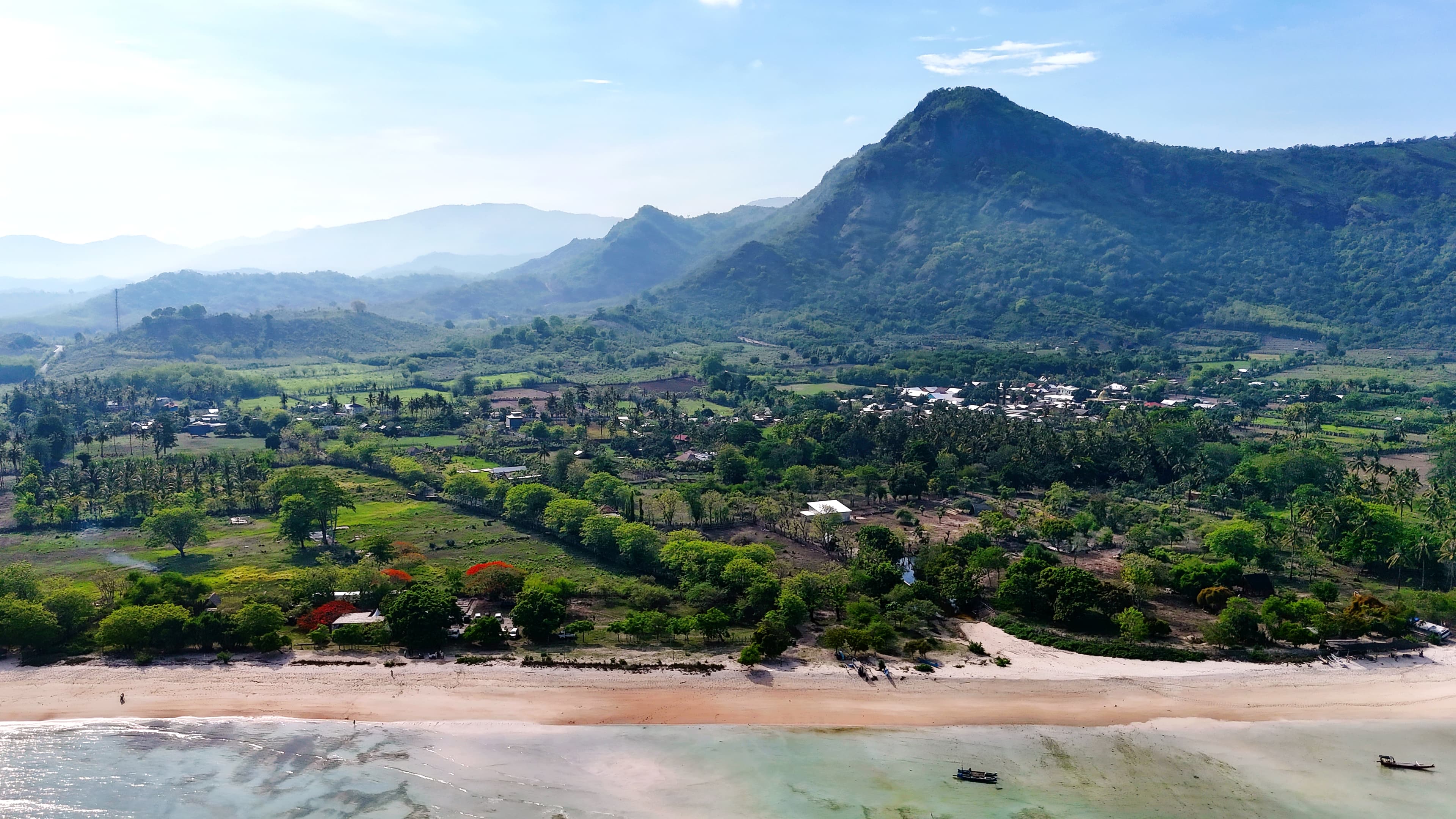
Land banking in Indonesia means acquiring land for future resale, subdivision or development rather than for immediate income. It can be a lawful investment strategy, but only when the land title, buyer structure, legal access, spatial designation, licensing requirements and a documented plan to actually use the land. Indonesian law does not reward land left idle.
Buying undeveloped land because it is cheap is not land banking. A credible acquisition starts with a lawful future use, a realistic future buyer and a plan to manage the land throughout the holding period.
The term “land banking” has two different meanings in Indonesia.
Private land banking is an investment strategy used by individuals or companies. Bank Tanah is a government-established agency that manages state land for public, social, development, economic-equality, land-consolidation and agrarian-reform purposes.
This guide concerns private land investment, not the state Land Bank Agency.
Is Land Banking Legal in Indonesia in 2026?
Indonesia does not generally prohibit acquiring land for a lawful future use. However, the legality and safety of the investment depend on who acquires the right, which title is used, whether the land complies with spatial plans, whether the required business licences are held and whether the land is managed in accordance with its legal purpose.
Land rights and registration are principally governed by Government Regulation No. 18 of 2021. Risk-based business licensing is governed by Government Regulation No. 28 of 2025. The control of abandoned land is governed by Government Regulation No. 48 of 2025.
How Land Banking Works in Indonesia
A land-banking strategy usually has four stages.
1. Buy Land Before the Area Is Fully Built Out
The objective is to acquire land before its future utility is fully reflected in the price. A credible investment thesis identifies the likely end user, the lawful end use and the events that could create future demand.
Those events should be independently verifiable, such as improved legal access, approved spatial plans, completed infrastructure, nearby development or a documented shortage of suitable plots. Announcements and rumours should not be treated as completed improvements.
The plot should have a realistic use from the start, such as a private residence, hospitality project, commercial development or lawful subdivision.
2. Remove the Risks That Scare Future Buyers
Raw land trades at a discount when the future buyer must resolve legal, regulatory or physical uncertainty.
Before purchasing, verify:
the title and the seller’s authority;
cadastral boundaries and usable area;
registered legal access;
spatial and forest-area status;
utilities and construction feasibility;
the ownership and licensing route;
disputes, encumbrances and third-party claims.
A risk that cannot be removed must be reflected in the purchase price and exit plan. A legally usable and accessible plot is more valuable than a cheaper plot with unresolved defects.
3. Manage and Use the Land Properly
Land banking is not the same as leaving land idle. During the holding period, the owner should maintain boundaries and access, prevent unlawful occupation, pay applicable taxes and company obligations, preserve title records and document the intended use and the steps taken toward it.
Under Government Regulation No. 48 of 2025, HGB may be classified as abandoned when it has intentionally not been managed, used and/or maintained for at least two years after the title was issued.
The two-year period does not automatically cancel the title. It can lead to an inventory and evaluation process, an opportunity to commence use, warning stages and a formal abandoned-land decree.
If the land is formally designated as abandoned, the title can become void and the land can revert to direct state control.
Owners should retain evidence of inspections, maintenance, access protection, licensing applications, spatial approvals and development preparation. The regulation also recognises circumstances such as legal disputes, zoning changes, authorised conservation use and force majeure when determining whether non-use was intentional.
4. Define the Exit Before Purchase
An exit may involve transferring the land right to an eligible buyer, subdividing and selling smaller plots, developing the property, entering a joint venture or, in some cases, selling shares in a PT PMA that holds HGB.
A share sale is not equivalent to a simple land sale. The buyer acquires the company together with its tax history, licences, contracts and liabilities, so separate corporate and tax due diligence is required.
The strongest acquisition is one with more than one viable exit and clear conditions for using each of them.
When Does Land Banking Make Sense?
Land banking can make sense when:
you do not require immediate cash flow;
you can fund taxes, maintenance, security and compliance throughout the holding period;
the plot has verified legal access;
its spatial designation supports a realistic future use;
the ownership and licensing structure is clear;
there is an identifiable future buyer or development use;
the investment thesis relies on more than one independently verifiable demand driver;
the exit does not depend on a fixed date;
the land can be managed in accordance with its title and intended purpose.
A strong land-bank asset remains legally usable and commercially relevant even when market development takes longer than expected.
When Land Banking Does Not Make Sense
Land banking is usually the wrong strategy when:
you require regular income from the asset;
the acquisition depends on a nominee arrangement;
the title, boundaries or legal access remain unresolved;
the spatial designation has not been independently checked;
the investment thesis depends on a single infrastructure announcement;
the economics require rapid price appreciation;
there is no budget for maintenance, compliance or licensing;
asking prices are being treated as evidence of completed market transactions;
the only plausible exit is resale to another speculative investor.
A cheap plot without secure rights, lawful access, a realistic use and a defined buyer is not a land-bank asset. It is an unresolved liability.
Land Banking vs Building a Villa
Factor | Land Banking | Villa Development |
Primary objective | Future resale, subdivision or development | Rental income and property appreciation |
Initial capital | Land, transaction and holding costs | Land, design, permits, construction and operations |
Immediate income | Usually none | Possible after completion and launch |
Owner obligations | Title, tax, maintenance, access and land-use compliance | The same obligations plus construction and operations |
Can Foreigners Do Land Banking in Indonesia?
Yes, but not through personal Hak Milik ownership. Foreign individuals cannot hold Hak Milik in their own name, and the legal structure must match the intended use of the land.
A long-term lease gives the investor a contractual right to use the land, not ownership of a registered land title. Its security depends on the underlying title, the landowner and the terms of the lease agreement.
Hak Pakai may be available to qualifying foreigners for permitted uses, particularly residential use. It is not a universal structure for speculative land banking.
HGB may be held through an Indonesian foreign-investment company, known as a PT PMA, when the company conducts a lawful business activity and its title, KBLI classification, OSS licences, spatial conformity and intended use are aligned.
Nominee arrangements do not provide the foreign investor with secure registered ownership and should not be treated as equivalent to a lawful title structure.
Under Government Regulation No. 18 of 2021, HGB over State Land or Hak Pengelolaan land may be granted for up to 30 years, extended for up to 20 years and subsequently renewed for up to 30 years. These are separate legal stages, not one unconditional 80-year grant.
A PT PMA is not merely a passive land-holding structure. Its corporate purpose, business classification, licences and intended activity must support the acquisition and use of the land.
The ownership structure should be determined before signing a deposit agreement or releasing funds.
Related guide: How Foreigners Can Own Land in Indonesia: HGB Explained.
What Should You Check Before Buying Land for Land Banking?
Title and seller
Verify the certificate, land book and current title data through BPN.
Confirm the seller’s identity, authority and required corporate, spousal or heir approvals.
Check mortgages, blocking notations, seizures, disputes and inheritance claims.
Investigate forest-area status, customary claims, community claims and third-party occupation.
Boundaries and access
Compare the cadastral survey with the physical boundaries and usable area.
Confirm registered legal access rather than relying on an informal promise or existing track.
Spatial planning and licensing
Verify the applicable RTRW, RDTR and spatial-conformity requirements.
Confirm the permitted use and any coastal, agricultural, environmental or protected-area restrictions.
Verify the buyer structure, title-transfer route, KBLI classification and required OSS, business and environmental approvals.
Physical feasibility
Assess topography, drainage, flooding, erosion, slope stability and geotechnical conditions.
Confirm practical road access, water, electricity, telecommunications and construction logistics.
Commercial and transaction review
Compare completed transactions rather than relying only on advertised prices.
Calculate acquisition, holding, infrastructure and disposal costs.
Identify the realistic buyer pool and at least one viable exit.
Link payments to documented legal milestones, execution of the PPAT deed and completion of the title-transfer process.
Related guide: Due Diligence Checklist: What to Verify Before Buying Land in Indonesia.
What Does Land Banking in Indonesia Cost?
The purchase price is only the starting cost. The full investment calculation should include:
applicable transaction taxes;
PPAT, legal and BPN fees;
title registration or conversion;
PT PMA establishment and annual compliance;
surveys and boundary work;
spatial, business and environmental approvals;
maintenance, security and site inspections;
access and infrastructure expenditure;
financing costs;
marketing, brokerage and disposal costs.
Net return = sale proceeds − acquisition price − transaction costs − holding costs − improvement costs − disposal costs.
Use completed comparable transactions rather than asking prices, and calculate the annualised return over the actual holding period. A higher nominal sale price can still produce a weak return when the land takes years to sell or requires unexpected access, licensing or infrastructure expenditure.
How Long Should You Hold Land in Indonesia?
There is no universal holding period for land in Indonesia.
The timeline should be linked to verifiable milestones, such as completion of legal access, receipt of required approvals, lawful subdivision, confirmed market demand or readiness to begin development.
The holding period must also remain consistent with the obligations attached to the title. HGB should not be left unmanaged indefinitely, because intentional non-use or lack of maintenance for at least two years can result in an abandoned-land review under Government Regulation No. 48 of 2025.
Define the investment-review dates, required milestones and exit criteria before purchasing the land.
Land Banking in West Sumbawa
West Sumbawa may suit buyers seeking land for private development, hospitality, subdivision or a longer-term strategic acquisition. However, the investment case must be assessed plot by plot.
Proximity to the beach, a surf break or an announced infrastructure project is not sufficient. The plot should have a verified title route, legal access, compatible spatial designation, usable terrain, realistic utility access and a defined future buyer.
When assessing West Sumbawa, distinguish:
completed transactions from advertised prices;
registered access from informal access;
approved or operating infrastructure from proposals;
legally developable land from land restricted by zoning, terrain or utilities.
Sumbawa Property Trust focuses on plots around Scar Reef, Jelenga and the wider West Sumbawa coast. For each available plot, we provide the title materials in our possession, parcel maps, zoning context, access information and the disclosed status of relevant infrastructure.
Buyers should independently verify every document, approval and legal conclusion before releasing funds.
Explore available land in West Sumbawa, or contact us with your preferred plot size via WhatsApp.
For acquisitions over five hectares, review our large-scale land acquisition process.
Primary Legal Sources
Government Regulation No. 18 of 2021 — land rights, HGB, Hak Pakai and land registration.
Government Regulation No. 28 of 2025 — risk-based business licensing and the OSS framework.
Government Regulation No. 48 of 2025 — control of abandoned areas and land.
Government Regulation No. 64 of 2021 — establishment and functions of Indonesia’s Land Bank Agency.
Legal note: This article was last reviewed on August 8, 2026, and provides general information only. Indonesian land law depends on the exact title, owner, location, spatial designation, corporate structure and intended use. Before paying a deposit or releasing funds, obtain independent advice from an Indonesian land lawyer, PPAT and tax adviser and, where relevant, spatial-planning and environmental consultants.